
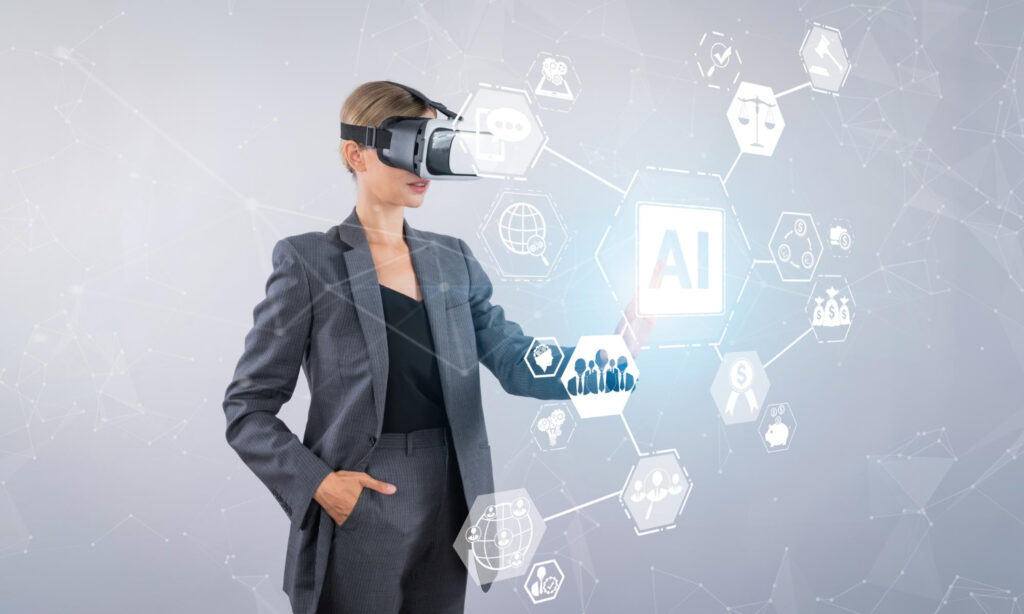
For years, conversations about artificial intelligence have been dominated by fear.
Will AI replace jobs?
Will machines take over human work?
Will automation eliminate entire professions?
While AI is certainly transforming industries and changing how businesses operate, the future is not simply a battle between humans and machines. In reality, the most important shift happening today is not humans versus AI — it is humans empowered by AI.
The future of work will belong to people who understand how to collaborate with intelligent systems rather than compete against them.
AI Is Becoming a Workplace Partner
Artificial intelligence is increasingly becoming part of daily workflows across almost every industry. From writing and design to customer service, recruitment, finance, marketing, healthcare, and education, AI tools are helping people work faster and more efficiently.
But AI alone is rarely enough.
AI can generate ideas, summarize information, automate repetitive tasks, analyze large amounts of data, and assist with decision-making. However, it still depends heavily on human creativity, judgment, communication, strategy, and emotional understanding.
This is why the future workplace is not fully automated. Instead, it is becoming collaborative.
The most effective professionals of the future will likely be those who know:
- when to use AI,
- how to guide AI,
- how to verify AI outputs,
- and how to combine human thinking with intelligent systems.
Human Skills Are Becoming More Valuable
One of the biggest misconceptions about AI is that technical skills alone will define success in the future economy.
In reality, many uniquely human abilities are becoming even more important.
As AI handles repetitive and predictable tasks, human value increasingly shifts toward:
- creativity,
- leadership,
- communication,
- adaptability,
- empathy,
- problem-solving,
- strategic thinking,
- and innovation.
AI may help generate content, but humans still shape ideas, meaning, direction, and emotional connection.
AI may analyze information quickly, but humans still make complex ethical, cultural, and strategic decisions.
The future workforce will not simply be more technical. It will be more collaborative between humans and intelligent systems.
AI as an Amplifier, Not a Replacement
One of the best ways to understand AI is to think of it as an amplifier.
AI amplifies productivity.
AI amplifies speed.
AI amplifies access to information.
AI amplifies creativity and experimentation.
A single designer can now generate multiple concepts faster than ever before. A marketer can create campaigns more efficiently. A small business owner can automate customer support. A freelancer can manage tasks that once required an entire team.
The result is not necessarily fewer humans. In many cases, it is individuals becoming more capable and productive.
This creates entirely new possibilities for people who are willing to adapt.
The Rise of Human + AI Workflows
In modern workplaces, AI is increasingly becoming part of collaborative workflows rather than standalone systems.
For example:
- recruiters use AI to optimize hiring processes,
- marketers use AI to generate and test content,
- entrepreneurs use AI to automate operations,
- educators use AI to personalize learning,
- and professionals use AI to improve productivity and communication.
The goal is not to remove human involvement entirely. The goal is to reduce repetitive work and allow people to focus more on high-value thinking and creativity.
This is one of the most important changes happening in the global economy today.
Why AI Literacy Matters
Just as computer literacy became essential over the last few decades, AI literacy is quickly becoming a necessary skill for the future workforce.
People no longer need to become software engineers to benefit from AI. However, understanding how AI works — and how to use it responsibly and effectively — is becoming increasingly important.
AI literacy includes:
- understanding AI capabilities,
- knowing AI limitations,
- using AI tools productively,
- communicating effectively with AI systems,
- and applying AI to real-world tasks.
Those who develop these skills early will likely have significant advantages in future career opportunities.
The Future Belongs to Adaptable People
Technology has always changed the way humans work. The industrial revolution transformed manufacturing. The internet transformed communication and business. Smartphones changed daily life and global connectivity.
AI represents another major shift.
As with every technological transformation, some tasks will disappear, others will evolve, and entirely new opportunities will emerge.
The people who succeed in this environment will not necessarily be those who know the most technical details. Instead, success will increasingly belong to those who:
- stay curious,
- continue learning,
- experiment with new tools,
- and adapt quickly.
Adaptability may become one of the most valuable career skills of the future.
Human Creativity Still Leads Innovation
Despite rapid progress in AI, human imagination remains at the center of innovation.
AI does not create vision independently. It does not understand human ambition, purpose, emotion, or long-term meaning in the way people do.
Behind every successful AI system, there are still humans:
- designing ideas,
- defining goals,
- making decisions,
- and shaping experiences.
This is why human-centered innovation matters more than ever.
The future is not about replacing people. It is about expanding what people are capable of achieving with intelligent tools.
Building a Smarter Future Together
At LANI Future, we believe AI should empower people, not intimidate them.
We believe the future economy will reward those who learn how to combine human creativity, communication, and strategic thinking with the capabilities of intelligent systems.
The future of work is not a competition between humans and AI.
It is a collaboration.
And the individuals, businesses, and communities that learn how to work alongside AI will be the ones best prepared for the opportunities of tomorrow.